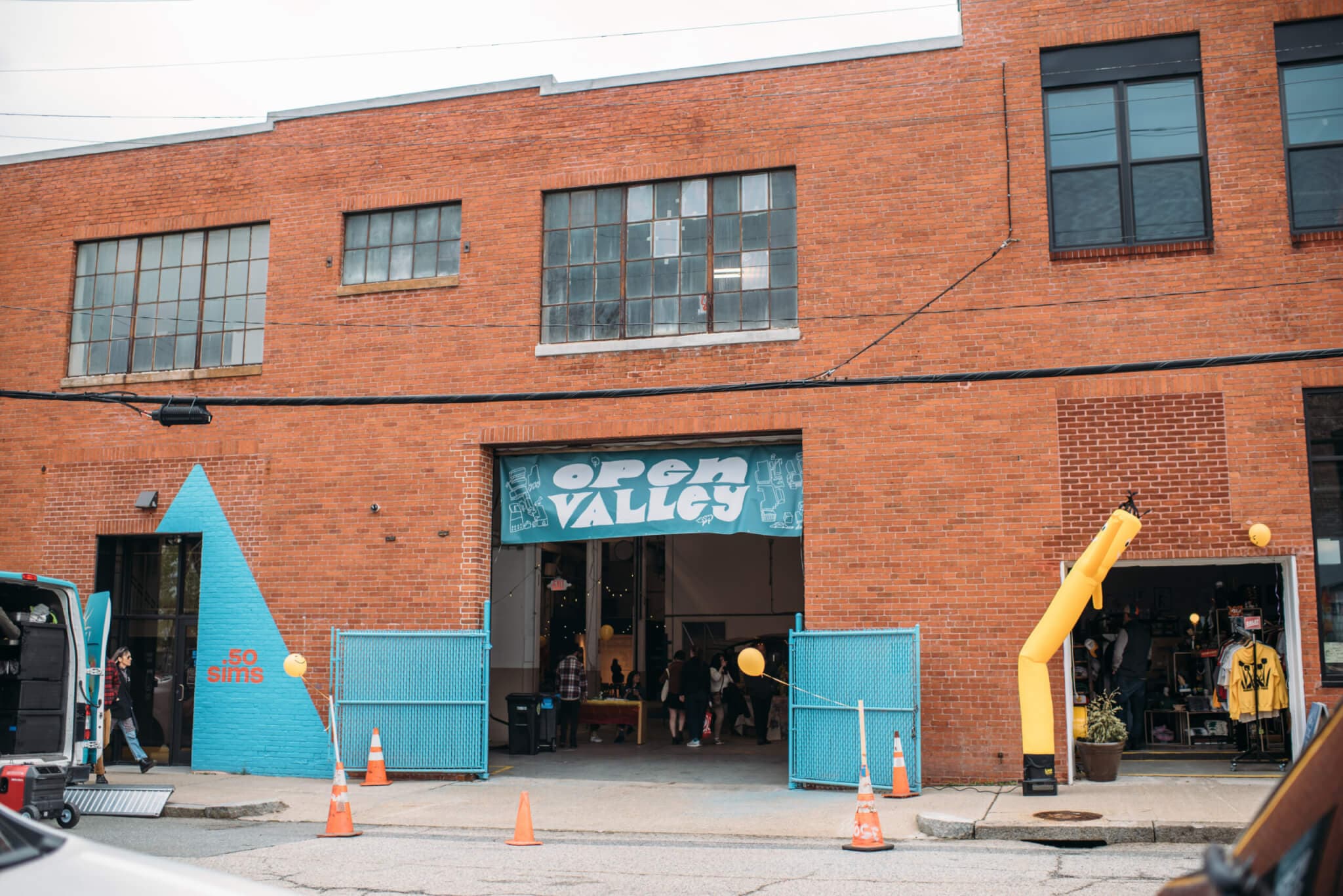
“PPE required beyond this point,” a sign informed me on a gray day last spring. As I walked along the concrete floors, I passed exposed pipes and more warnings about eye protection, safety shoes, and respirators—vestiges of the more than a century the complex at 50 Sims Avenue in Providence spent as a factory. Opened in 1900 as a headquarters for the Textile Finishing Machinery Company, the facility went on to manufacture high-tech materials for Umicore until the company shuttered the location in 2017, leaving the property vacant.
But in 2021, the Providence Redevelopment Agency struck a deal with Philadelphia developer Scout to revive the site. Now 50 Sims is one of a number of former factories to find new life as workspace for artists and makers in Valley, a neighborhood in Providence named for the Valley Street that runs through it. And on May 2, the hulking brick buildings that line the Woonasquatucket River bustled with activity for the inaugural Open Valley, a biannual event produced by 50 Sims but reaching across the neighborhood and set to return for a fall edition on November 7.
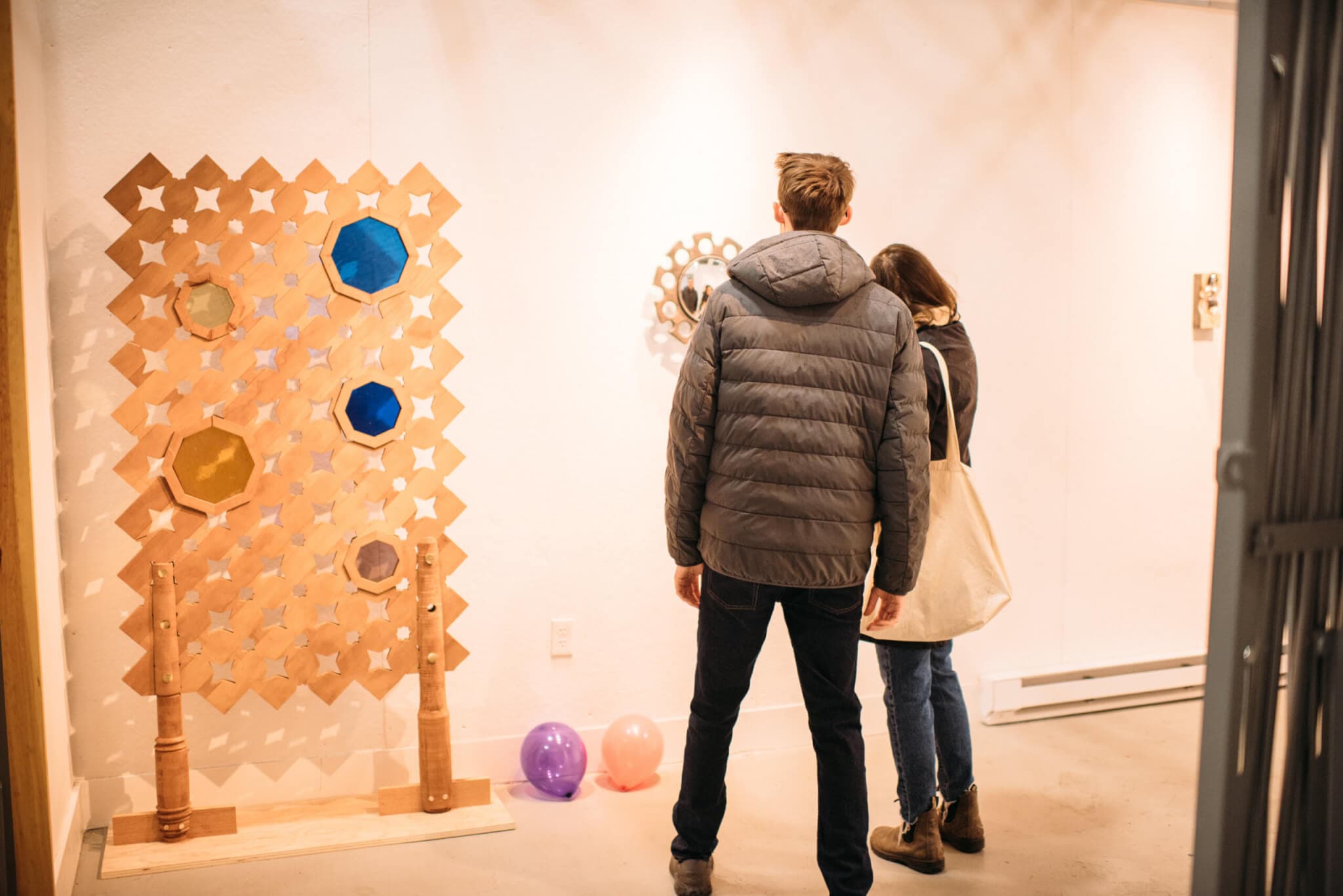
Back in May, after passing the inflatable tube figure waggling a welcome at the entrance of 50 Sims, I started by scoping out spooky pins, patches, and prints at Hungry Ghost Press. In the restroom (still equipped with lockers and showers from its factory past), I met an interior designer trying on a perfectly perforated sweater from RISD alum Lindsay Degen’s namesake knitwear brand. I caught a whiff of the sea that turned out to be Shellf Life, Felicia Neuhof’s start-up transforming oyster, mussel, and clam shells discarded by restaurants into hand-cast bowls and tiles. I somehow managed to miss the Sound Archives collective’s installation of field recordings in the building’s loading dock, but I did take in an exhibition of art by Sara Ahli and Will Beattie at OPEN, a 200-square-foot project space that hosts a dozen shows annually.
OPEN is the brainchild of artist Ben Sisto, a MassArt alum who hopes to make the gallery a welcoming third space—hence the Ping-Pong table outside. “I want people to feel like interesting aesthetics are part of their everyday experience,” he explains. Sisto is also an organizer who’s had a hand in more than two thousand events in his career, from DIY concerts in Boston to programming for the Ace Hotel in New York to the spring Open Valley event, which he spearheaded as 50 Sims’ manager of events and community programs. “The biggest response I heard from artists and visitors alike was that the sheer density of creative practices in Valley is surprising,” says Sisto, who had more than ninety artists, studios, and organizations sign on for the spring event and who is currently prepping for the fall edition. “It seemed few people, myself included, really understood the depth and breadth of work happening here, in all sorts of spaces.”
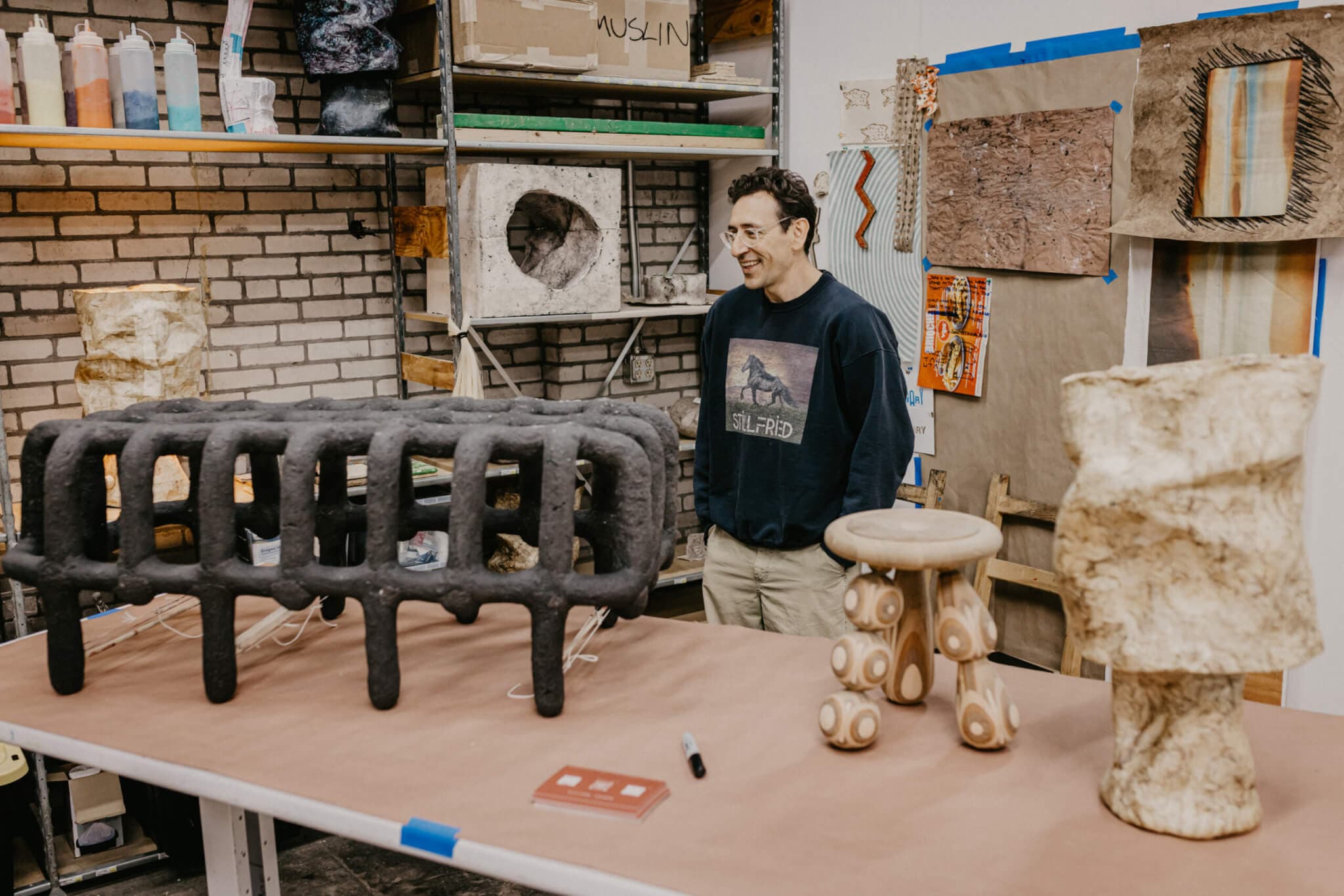
Those spaces include Valley stalwart the Steel Yard, a nonprofit industrial art center founded in 2002 in a complex on Sims that once housed the Providence Steel and Iron Company. Now it offers residencies and classes in blacksmithing, welding, jewelry, foundry, and ceramics (not to mention an annual iron pour where artists melt two thousand pounds of metal and light up the night with fire-breathing sculptures). Partnership for Creative Industrial Space, a nonprofit real estate developer and advocacy group, manages several studio buildings in the area, including Rathbone Studios, a Depression-era dry goods warehouse where Samuel Aguirre uses natural fibers to create sculptural furniture; Nicholson File Art Studios, part of a bygone toolmaker’s sprawling campus, where Aleksandra Azbel of Sashoonya crafts textiles with natural dyes coaxed from marigold, avocado pits, and bladderwrack seaweed; and Acorn Studios, home to tenants such as Bidon Community Print & Design Studio, where master printmaker Jacques Bidon teaches letterpress and offset lithography to adults and youth alike. Elsewhere on Acorn Street, you’ll find Aunty’s House, a nonprofit community art studio centering parent-artists founded by Lilly Manycolors, whose mixed-media paintings, photographed and filmed performances, and ceramic masks are currently on view in a retrospective there. And that’s just a sampling of the spaces within a few minutes’ walk that were helpfully mapped out on Open Valley fliers drawn by Jules Kang Sharpe, a member of the cooperative print and publishing studio Binch Press / Queer.Archive.Work, which maintains a zine library and community space on Harris Avenue.
Valley’s density and diversity of artistic practices have been inspiring for painters Lousillia Bailey and Angelo Janey, two transplants from Boston who’ve been renting space at Nicholson File Artist Studios since the summer of 2025. It’s the couple’s first time working in their own dedicated studio, which they’ve dubbed Glu Factory—a nod to their nicknames, Lucii and Glo, and to their factory digs. “Studio resources in Providence were a lot more attainable than in Boston,” they explain via email. “Since we’ve opened our art studio at the Nicholson File, we’ve met other amazing artists, and it’s provided us with so many opportunities to showcase, sell, and ultimately share our art with others.”
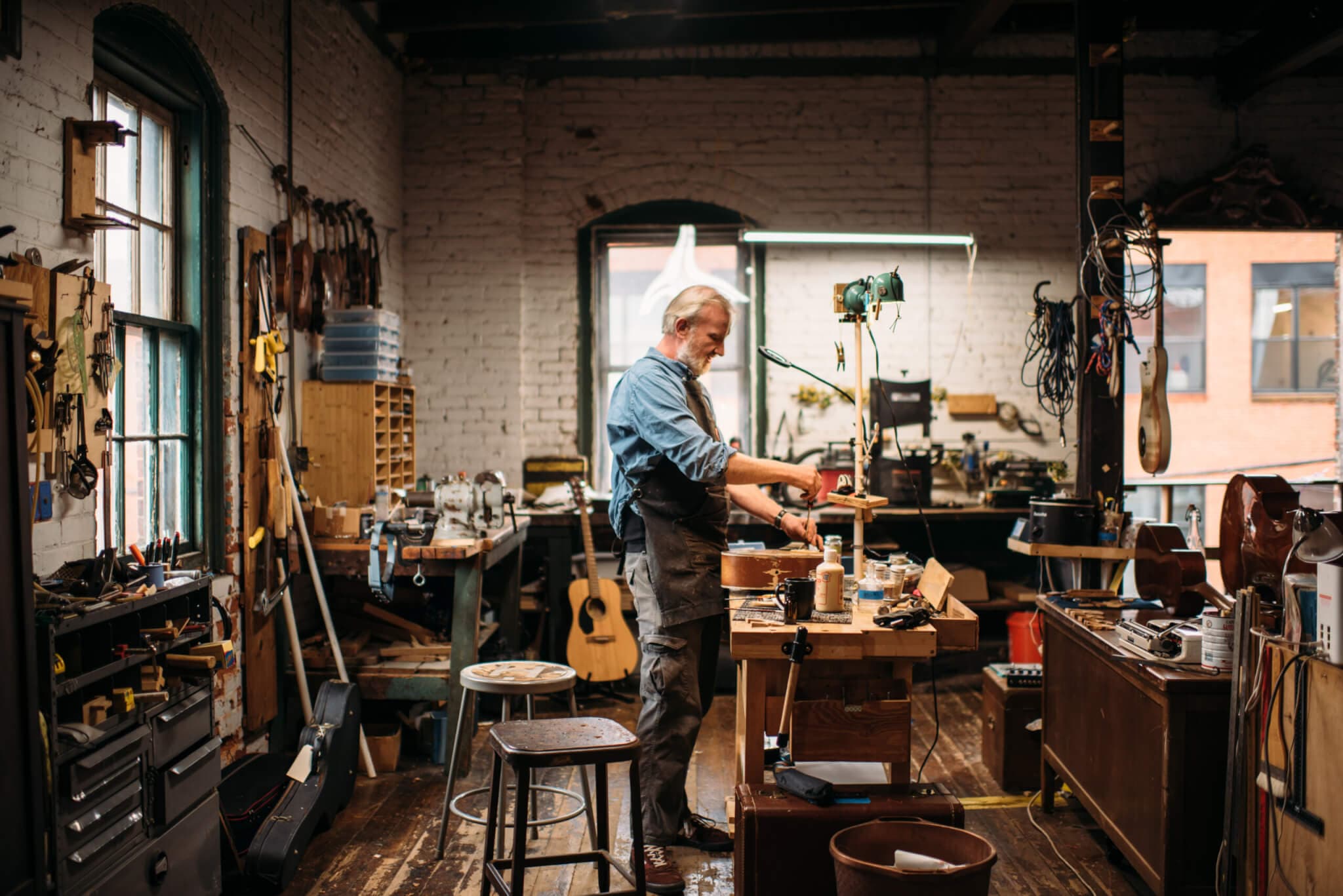
While Bailey and Janey are relative newcomers to Valley, musician and luthier Erik Talley of Talley Strings has a long history in the area. He moved to Providence in 1997 and lived in Fort Thunder, a storied space in a former mill on Atwells Avenue that was home to an art collective and underground music venue from 1995 until 2001, when the building was sold and demolished to make way for a short-lived Shaw’s supermarket. Talley started his instrument repair business in 2004 and ran it from home until 2019, when he set up shop at 55 Sims Avenue in the Potato Palace, named for its past storing and processing spuds.
When I visited in May, Talley Strings was one of the day’s memorable surprises: The ground floor of the building looked abandoned and forbidding, but I ventured upstairs to find a lively shop full of tools and instruments mid-tuneup and a doorway-turned-window with a great view of the action on Sims Avenue. But Talley was asked to vacate the space in September after the structure was deemed unsafe. He’s since set up shop in a temporary space at the Clubhouse Gallery on Atwells Avenue and eventually hopes to move into a spot on Florence Street. But he admits a recent sighting of a Ferrari in the neighborhood felt like an omen, and he wonders whether he’ll be able to continue to afford rent in Valley. “My one takeaway is, if you want a healthy, flourishing arts area, cheap rent is the only thing that’s really required,” Talley says. “People who want to make work want to be able to focus on making their work.”
For now, though, there are many people making their work here, and many of them will open their doors on November 7. Sisto notes that new participants in Open Valley this time around include the Creative Reuse Center of Rhode Island, an art supply thrift store that moved into 50 Sims in June and sells low-cost materials, from paint and yarn to leather scraps and “bead salad” (picture all the beads happily commingled in one bucket). He hopes that the event will bring people to an industrial part of Providence some might have otherwise overlooked or perhaps felt intimidated by. “A big incentive is to try to get people to the area to wander and walk around and maybe get more comfortable with the idea that these buildings aren’t scary,” Sisto says. “They’re filled with artists and makers, and it’s actually a super queer, BIPOC-inclusive, grassroots, and very welcoming place.”